
LEO satellite failover means adding a Low Earth Orbit satellite connection — from providers like Starlink or Amazon's Project Kuiper — as a backup WAN path that automatically takes over when an enterprise's primary internet connection goes down. Unlike older geostationary satellites parked roughly 35,786 kilometers above the equator, LEO satellites orbit a few hundred to about 2,000 kilometers up, cutting latency enough to support VoIP calls, VPN sessions, and cloud applications rather than just basic browsing.
The market is moving fast. Enterprise satellite internet is projected to grow from roughly $5.6 billion to $23.6 billion by 2029, and 2026 is the year it crossed from a niche workaround into a mainstream procurement line item. In September 2026 alone, AT&T announced an enterprise satellite partnership built around Amazon's LEO network, while Amazon's Project Kuiper — already running a private enterprise beta with customers including JetBlue, Hunt Energy, and Crane Worldwide Logistics — unveiled its Leo Ultra terminal, rated for up to 1 Gbps downstream and 400 Mbps upstream.
For enterprises, this matters because connectivity has quietly become as critical as power. A branch office, retail location, or remote site that loses its only internet path loses card processing, VoIP, cloud ERP access, and security camera monitoring all at once. LEO failover doesn't replace fiber or 5G as a primary connection — it gives enterprises a second, physically independent path that keeps operating when the primary line is cut, congested, or knocked out by a regional outage.

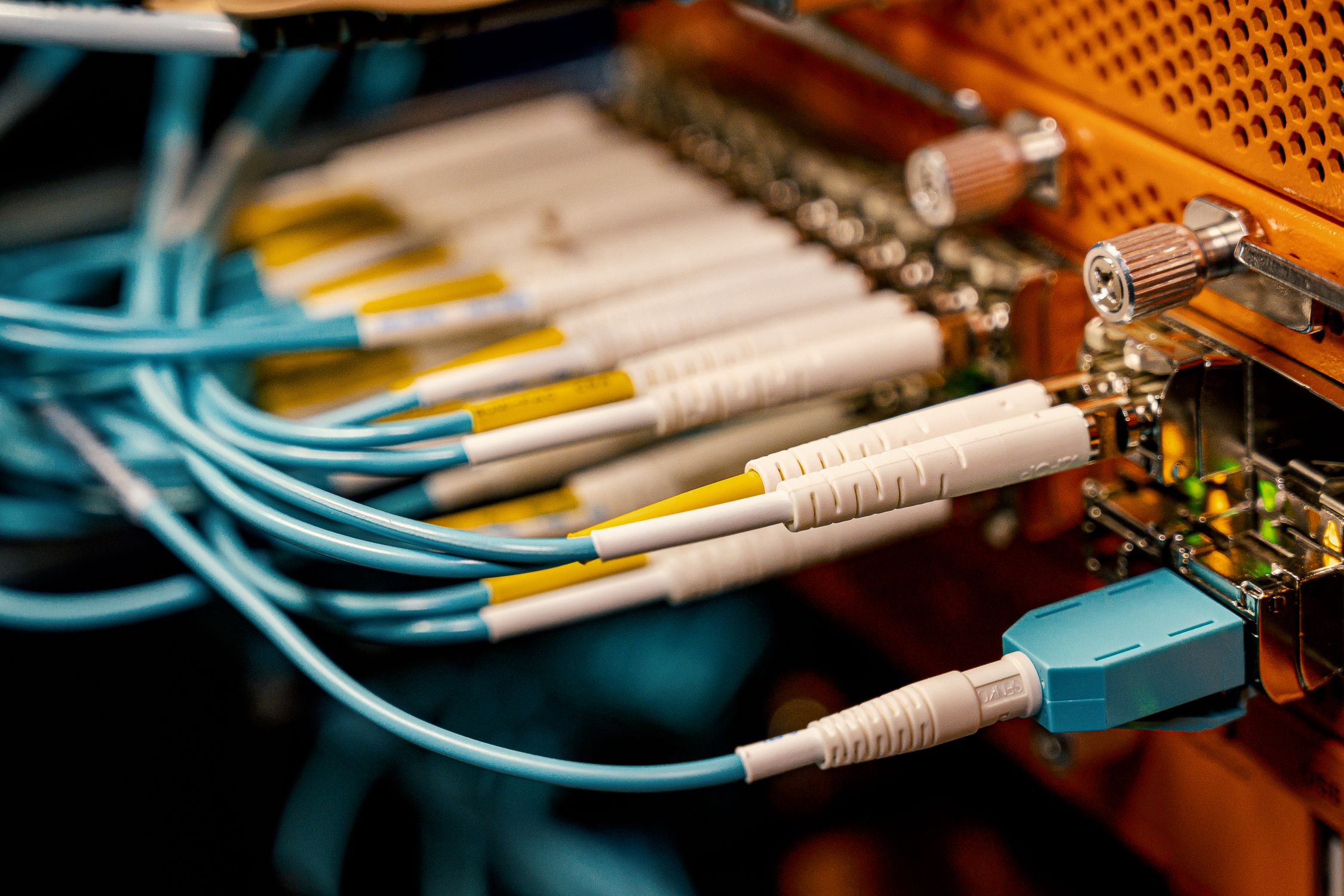
Most enterprise sites still depend on a single physical path to the internet: one fiber line, one cable modem, sometimes backed up by a cellular hotspot that shares the same regional infrastructure and fails for the same reasons. A single backhoe through a conduit, a damaged pole, or a carrier-side outage can take an entire site offline for hours, regardless of how much redundancy exists inside the building.
The financial impact is well documented. Retailers lose point-of-sale revenue by the minute during an outage; healthcare clinics lose access to patient records and scheduling; call centers and branch offices lose the ability to make or receive calls entirely. One case study following a business with 70 locations across the southeastern United States found the sites experiencing roughly 25 outages per year from fiber cuts alone — a number that dropped to zero downtime once LEO satellite failover was layered on top of the existing WAN.
The deeper problem is that traditional backup links often aren't as independent as they look. A cellular failover router sharing the same regional tower infrastructure as a damaged fiber route can go down at the same time as the primary connection, in the same outage. LEO satellite is different: it reaches the network through a constellation of satellites and ground stations that don't share physical infrastructure with terrestrial fiber or cell towers, giving enterprises a genuinely independent second path rather than a false sense of redundancy.

Deploying LEO satellite failover is primarily a networking and orchestration exercise, not a satellite engineering project — most of the complexity is handled by the provider and the router, not the enterprise IT team.
The first step is installing a satellite terminal — a compact phased-array antenna and modem — at each site that needs failover coverage, with a clear view of the sky. Retail branches, data centers, and remote facilities can typically have a terminal mounted and activated within days rather than the months a new fiber build would require.
The second step is connecting that terminal to a multi-WAN router or SD-WAN appliance capable of treating satellite as just another WAN path alongside fiber and cellular. This is where the architecture really pays off: modern SD-WAN platforms continuously run health checks — monitoring latency, jitter, and packet loss on every path — and automatically steer traffic to whichever link is healthiest at that moment.
The third step is policy-based routing: deciding which traffic fails over first. Enterprises typically prioritize keeping VoIP calls, point-of-sale transactions, and VPN sessions alive on the best available path, while deprioritizing bulk transfers or non-critical browsing that can tolerate a slower connection during a failover event.
The fourth step is session preservation, so that a failover doesn't just restore connectivity — it restores it without dropping active calls, transactions, or VPN tunnels mid-session. This requires an orchestration layer capable of shifting traffic between paths without the application layer noticing, which is a core function of enterprise-grade SD-WAN and managed connectivity platforms rather than a basic consumer router.
Finally, enterprises need centralized visibility across every site and every path — fiber, cellular, and satellite — so network teams can see which locations are running on backup links in real time and act before a secondary outage becomes a full blackout.

Adding LEO satellite failover isn't just an insurance policy against rare disasters — it changes the economics of network uptime for enterprises with distributed locations.
The most direct benefit is protecting revenue that depends on connectivity. Retail locations keep processing card payments during a fiber cut instead of turning away customers or reverting to manual, error-prone workarounds. Contact centers and branch offices keep making and receiving calls — a benefit that matters most for organizations running VoIP and SIP trunking as their primary telephony, since a dropped internet connection would otherwise mean a dropped phone system as well.
LEO failover also expands where enterprises can reliably operate. Remote sites, construction locations, temporary pop-up operations, and facilities in areas with limited fiber competition can now get enterprise-grade connectivity without waiting on a wired build-out, opening up site locations that would previously have been considered too remote to support modern IT and telephony needs.
There's a risk-management benefit for compliance and continuity planning, too. Auditors and cyber-insurance underwriters increasingly ask about network redundancy and business continuity plans as a matter of course. Being able to point to a tested, independent failover path — rather than a single point of failure — strengthens both compliance posture and negotiating position with insurers.
Finally, centralizing fiber, cellular, and satellite under a single managed connectivity strategy reduces vendor sprawl. Instead of juggling separate contracts and support lines for each access technology, enterprises get one partner accountable for uptime across every path, at every site.

With more than 30 years delivering enterprise connectivity across Latin America, the United States, and Europe, HIT Communications helps organizations build failover architectures that keep critical operations running when a primary connection goes down — without taking on the complexity of managing satellite, fiber, and cellular contracts separately.
Our managed connectivity and SD-WAN solutions integrate LEO satellite failover alongside dedicated internet, multi-operator connectivity, and cellular backup into a single managed architecture, with policy-based routing that keeps voice, point-of-sale, and VPN traffic prioritized during any outage. For organizations running voice and contact center operations over IP, we design failover specifically to protect call continuity, not just generic internet access.
Whether an enterprise is evaluating its first satellite failover deployment or looking to consolidate an existing patchwork of backup links into one managed strategy, HIT Communications' engineers assess each site's risk profile — outage history, terrain, sky visibility, and criticality — and design a connectivity architecture built around keeping that specific location online, not a one-size-fits-all backup plan.
Network downtime used to be an inconvenience enterprises absorbed and apologized for. In 2026, with LEO satellite constellations reaching genuine commercial maturity and enterprise deployments already proving it can take sites from dozens of outages a year to zero, downtime is increasingly a choice rather than an inevitability.
The organizations moving first aren't necessarily the ones with the biggest budgets — they're the ones that have mapped where their single points of failure actually are and started treating connectivity redundancy as core infrastructure rather than an afterthought.
Ready to find out how exposed your locations really are to an outage? Contact HIT Communications today to assess your network's failover readiness and build a business continuity plan suited to your sites.

Find out how we can transform your business. Talk to one of our experts now!
Get in touch