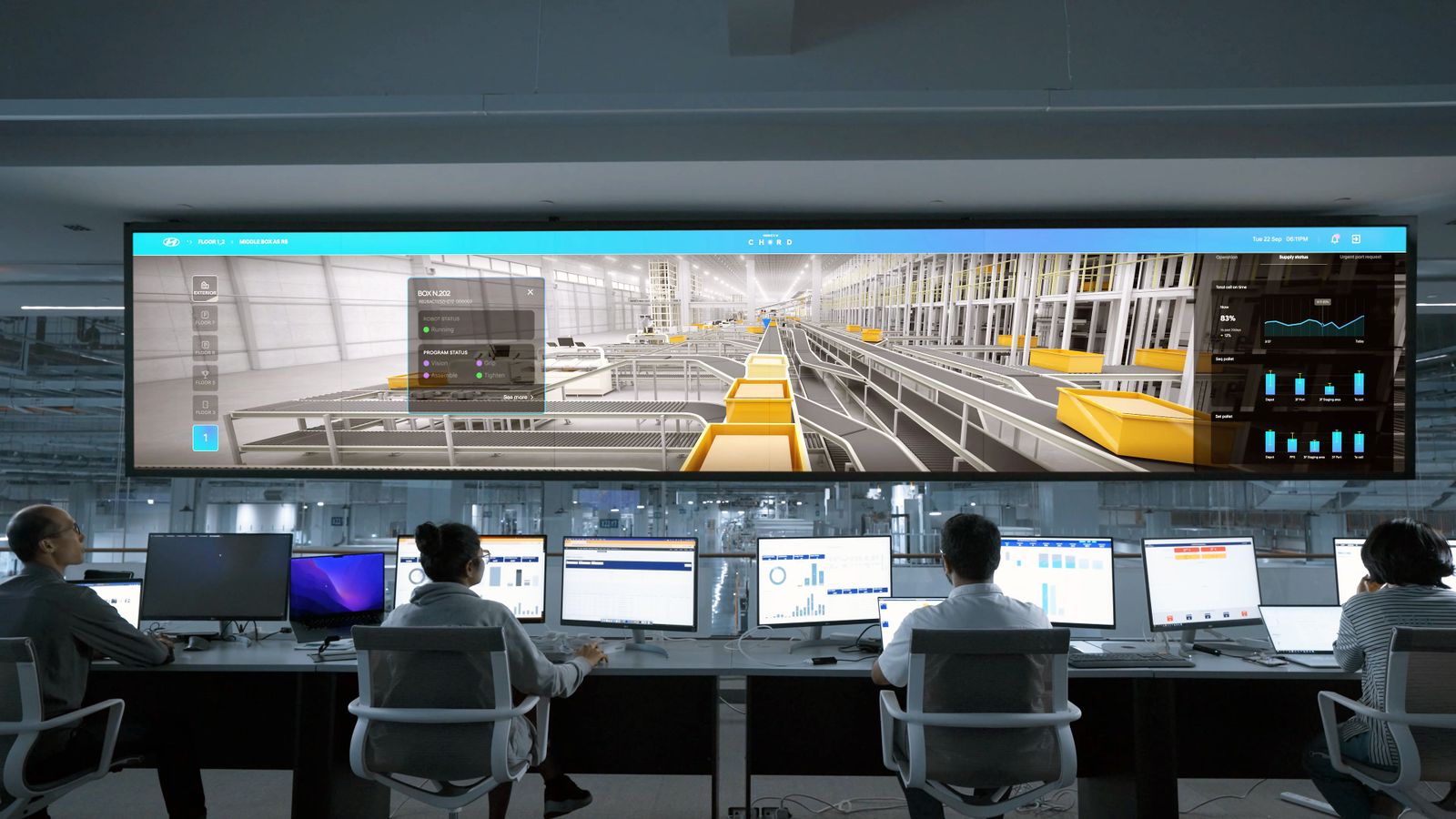
An agentic AI service desk is an IT support system in which autonomous AI agents don't just answer questions — they reason over a ticket, decide on the correct remediation, and execute it directly inside connected systems, with minimal human intervention. Unlike the scripted chatbots of the early 2020s, which could only follow rigid decision trees, today's agentic platforms combine large language models with orchestration layers that read logs, query a configuration management database (CMDB), and call APIs to reset a password, provision a license, or restart a failed service.
The shift is no longer experimental. By 2026, roughly three out of four organizations report using AI in at least one IT service management function, and vendors have moved fast to capture the opportunity: ServiceNow's acquisition of Moveworks and Kyndryl's launch of its own Agentic Service Management platform both signal that autonomous IT support has become a board-level priority rather than a pilot project.
For enterprises running distributed teams across Latin America, the US, and Europe, the appeal is straightforward. A traditional service desk scales linearly with headcount and ticket volume; an agentic one scales with compute. That matters most for organizations juggling hybrid work, SaaS sprawl, and 24/7 operations, where a connectivity issue raised at 2 a.m. in one time zone can't wait for a technician to log on eight hours later in another.


Most enterprise IT teams are drowning before they even open their inbox. Ticket volume has climbed steadily as hybrid work, SaaS sprawl, and AI-adjacent tooling multiply the number of systems an employee can get stuck in, while headcount in internal IT rarely grows at the same pace. The result is a familiar cycle: queues back up, average resolution time stretches from hours into days, and the same level-1 requests — password resets, VPN access, printer connectivity, software provisioning — consume time that should go to higher-value work like security hardening or infrastructure modernization.
The human cost compounds the operational one. Analysts covering the space now flag burnout as a leading driver of IT staff attrition, particularly on service desks that still triage every request manually. Every escalation that could have been resolved automatically becomes an interruption, and every unresolved ticket becomes a support-satisfaction score in freefall.
There's a security dimension too. A ticket queue that takes days to clear is also a queue where access requests, credential resets, and endpoint issues sit unresolved — exactly the kind of gap that attackers exploit. Enterprises that pair automation with strong managed IT services close that gap by keeping infrastructure, backup, and support responsive around the clock rather than only during business hours in a single region.

An agentic service desk works in five stages. First, ingestion: the system receives a ticket, chat message, or automated alert and normalizes it — pulling in the requester's identity, device, and location. Second, reasoning: a large language model interprets the request against historical tickets, logs, and the CMDB to classify the issue and estimate confidence in a resolution path. Third, decision: the platform checks that path against a policy engine. Low-risk, well-understood actions — unlocking an account, restarting a service, provisioning standard software — proceed autonomously. Higher-risk actions, such as elevating privileges or touching production infrastructure, route to a human for approval.
Fourth, execution: for approved actions, the agent calls the relevant API or runbook directly, whether that's an identity provider, a network controller, or a backup system, and closes the loop without a technician touching a keyboard. Fifth, learning: the resolution and any human corrections feed back into the knowledge base, so the next similar ticket resolves faster and with less oversight.
That human-in-the-loop checkpoint at step three is what separates a well-run agentic service desk from a liability. An AI agent with standing credentials across identity, network, and endpoint systems is also a new attack surface if it isn't governed carefully — a lesson enterprises are learning as attackers increasingly target automation pipelines directly. Pairing agentic IT support with managed cybersecurity — including monitoring of the AI agent's own account activity — keeps the efficiency gains from becoming a new entry point.

The efficiency numbers are the headline: best-in-class agentic deployments now resolve 20-40% of tickets with no human involvement, and deployment timelines for narrowly scoped, chat-native tools can run as short as a few days rather than the three-to-six-month rollouts typical of legacy ITSM platforms. For a multinational enterprise, that translates into lower cost per ticket, faster mean-time-to-resolution, and IT staff redirected from repetitive triage toward the infrastructure and security projects that actually reduce risk.
The 24/7 coverage matters just as much as the cost savings for organizations with operations spanning multiple countries and time zones. An agentic service desk doesn't sleep, doesn't need a night-shift premium, and can support employees in Spanish, Portuguese, and English without a dedicated multilingual roster.
There's also a reliability upside that goes beyond the help desk itself. When agentic support is integrated with network monitoring and managed connectivity, the same reasoning layer that resolves a ticket can flag a degrading circuit or a failing SD-WAN tunnel before it generates dozens of tickets from frustrated users — shifting IT from reactive firefighting to proactive maintenance. For enterprises still measuring service desk performance purely on ticket-closure counts, that shift in posture is often the bigger long-term win.

Rolling out agentic AI support isn't a plug-and-play decision — it depends on the maturity of the infrastructure underneath it. A service desk agent can only act as fast and as safely as the systems it's connected to: identity management, network visibility, backup, and endpoint security all need to be in order first.
HIT Communications has spent more than 30 years building that foundation for enterprises across Latin America, the US, and Europe. Our IT managed services team handles the cloud infrastructure, patching, and backup discipline that agentic automation depends on, while our SOC provides the monitoring layer that keeps AI-driven support accountable rather than opaque.
We also help unify the channels through which support requests arrive — chat, voice, email, and self-service portal — so an agentic system has one consistent view of every request rather than fragmented queues. Our omnichannel integrations connect those channels to the same CRM and ticketing backbone, a prerequisite most enterprises underestimate before automating anything on top of it.
Whether you're piloting your first AI agent on level-1 tickets or rearchitecting a global service desk, we help enterprises sequence the infrastructure, security, and integration work so automation adds capacity instead of risk.
Agentic AI service desks are no longer a future-state pitch — they're already resolving a meaningful share of enterprise IT tickets in 2026, and the gap between organizations that have adopted them and those still triaging every request manually is starting to show up directly in resolution times and IT staff retention. The enterprises getting the most value aren't necessarily the ones with the most advanced AI; they're the ones that got the underlying infrastructure, security, and channel integration right first.
If your service desk is buried in tickets, your team is stretched thin, or you're evaluating whether your current infrastructure can support autonomous IT agents safely, HIT Communications can help you assess where you stand. Contact our team to talk through a readiness assessment for agentic AI in your environment.

Find out how we can transform your business. Talk to one of our experts now!
Get in touch