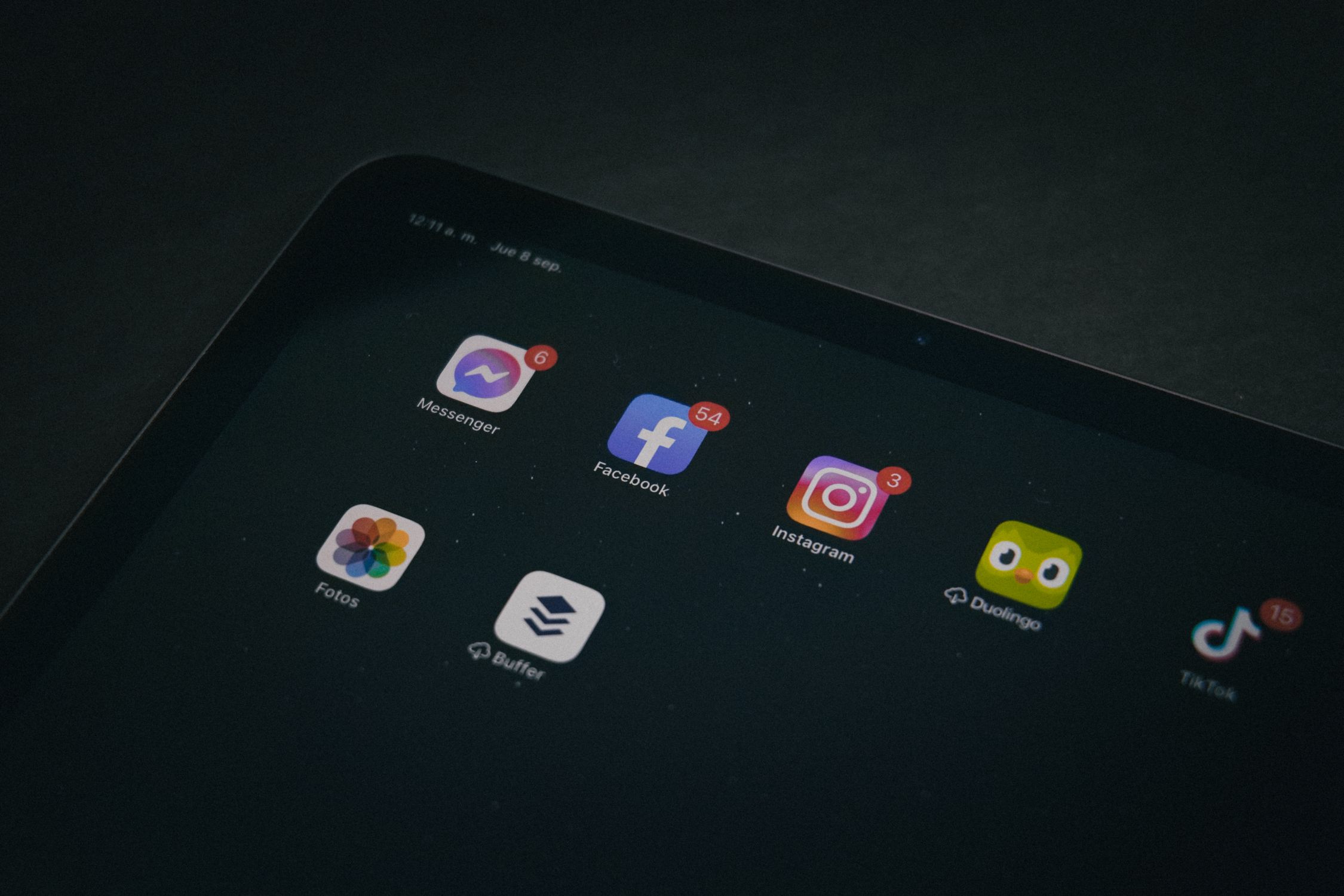
Omnichannel customer experience (CX) is a service model in which every channel a customer uses — voice, chat, email, WhatsApp, social media, and self-service portals — shares one continuous conversation history and context. Unlike multichannel service, where each channel operates as its own silo, omnichannel CX means an agent picking up a call already knows that the customer messaged support on WhatsApp an hour earlier, and a chatbot can hand off a complex case to a live agent without the customer repeating themselves.
For enterprises, this distinction has become a competitive necessity rather than a nice-to-have. Buyers and support tickets now originate across five or more channels on average, and customers judge a brand by whether those channels feel like one company or five disconnected departments. In 2026, AI has become the connective tissue that makes true omnichannel service achievable at scale: it can read a screenshot a customer sends over chat, interpret sentiment in a voice call, and summarize the entire journey for a human agent in seconds — capabilities that would have required a large operations team just a few years ago. Enterprises that get this right report faster resolution times, higher first-contact resolution, and materially better customer retention than those still running channels in isolation.
The shift is also generational. Younger business buyers and consumers alike expect to start a conversation on one channel and finish it on another without friction — messaging a question on WhatsApp during a commute, then calling to finalize a purchase decision, then following up by email for a receipt. When those three touchpoints are treated as three separate cases, the enterprise looks disorganized even if every individual agent did their job well. Omnichannel CX is, at its core, a promise that the company remembers the customer, not just the channel.

The single biggest obstacle to omnichannel CX is not a lack of channels — most enterprises already offer phone, chat, email, and social support. The problem is that customer data lives in separate systems that don't talk to each other. A call center platform, a CRM, a ticketing tool, and a chat widget each hold a partial view of the same customer, and industry research consistently finds that only a small fraction of contact centers can deliver a truly connected hand-off when a customer switches channels mid-conversation.
The result is a familiar and costly pattern: customers repeat themselves, agents work without context, and resolution times stretch out while satisfaction drops. For enterprises operating across Latin America, the US, and Europe, this fragmentation is often compounded by legacy on-premises PBX systems that were never designed to feed data into modern CX or CRM platforms, and by contact centers that were built and scaled independently in each country or business unit. Fixing the underlying connectivity and data-sharing problem — not adding another point-solution channel — is what actually closes the experience gap in 2026.
There is also a governance dimension enterprises can no longer ignore. As more customer interactions are automated or assisted by AI, leadership teams are under pressure to prove those systems are accurate, auditable, and secure — particularly when interactions involve payment details, account changes, or personal data. Vendors and internal platforms that cannot demonstrate strong identity verification and data controls are increasingly screened out during procurement, which means the fix for fragmentation has to be a secure, governed platform rather than another disconnected app bolted onto the stack.
Closing the fragmentation gap requires three layers working together. First, a unified communications backbone: cloud PBX, voice, chat, and messaging channels need to run on infrastructure built to interconnect rather than legacy hardware that isolates each channel. HIT's omnichannel platform integrates voice, chat, email, and social channels with CRM systems so every interaction updates the same customer record in real time.
Second, AI orchestration sits on top of that unified data layer. Multimodal AI models can now interpret text, voice tone, and shared images or documents together, routing a case to the right team automatically and drafting a summary so a human agent starts the conversation already informed. Third, connected call center infrastructure ties it together operationally: HIT's cloud PBX and call center solutions give supervisors real-time visibility into queues and agent performance across every channel and location, rather than a separate dashboard per country or system.
The result is a pipeline where a customer's WhatsApp message, follow-up phone call, and email complaint are recognized as the same case, with full context carried at every step — the practical definition of omnichannel CX done right.
Critically, none of these three layers work in isolation. A brilliant AI model fed fragmented data still produces fragmented answers, and a unified data layer without AI orchestration still requires agents to manually stitch the story together. Enterprises that treat this as a single connectivity, platform, and AI project — rather than three separate initiatives owned by three separate teams — see the fastest and most durable results.

Enterprises that modernize their CX stack see returns beyond customer satisfaction scores. AI-assisted routing and summarization reduce average handle time, since agents no longer waste minutes reconstructing context from multiple systems. First-contact resolution improves because the right specialist — or the right AI-assisted answer — is reached faster. Analysts project AI-driven automation will meaningfully reduce contact center labor costs over the next several years as routine interactions are resolved without a live agent, freeing skilled staff for complex, high-value cases.
There are also retention and revenue effects: customers who experience a disjointed handoff are measurably more likely to churn, while a connected journey builds the kind of trust that drives repeat business and referrals. For multinational enterprises, unifying CX also simplifies compliance and reporting, since one platform — rather than a patchwork of regional tools — generates consistent data for quality assurance and regulatory audits. None of this works, however, without dependable underlying infrastructure; enterprises pairing their CX transformation with HIT's IT managed services get the uptime, monitoring, and support needed to keep every channel running without interruption.
There is a talent benefit as well. Agents who spend less time toggling between systems and repeating questions customers already answered report higher job satisfaction and lower burnout, which in turn reduces the cost and disruption of contact center attrition — a persistent problem for enterprises running large, multi-country support operations.

HIT Communications has spent more than 30 years building the connectivity and communications infrastructure that enterprises in Latin America, the US, and Europe depend on, and omnichannel CX sits squarely at the intersection of our core strengths. Our cloud PBX and call center platform gives contact centers a single operational backbone, while CRM integrations connect that backbone to the customer data enterprises already rely on. Because customer interactions increasingly carry sensitive personal and payment data across every channel, we also pair CX deployments with our managed cybersecurity services — SOC monitoring, SIEM, and MDR — so contact centers meet the security and compliance scrutiny now expected of any AI-enabled customer platform.
And because omnichannel CX lives or dies on network reliability, our managed connectivity and SD-WAN services ensure voice quality and application performance stay consistent across every office, call center, and remote agent — no matter which country they're operating from.
Omnichannel CX is no longer a differentiator reserved for the largest brands — it is becoming the baseline enterprises are expected to meet in 2026, and the technology to deliver it profitably is now mature. The enterprises that move first will capture the retention and efficiency gains before it becomes table stakes; those that wait will keep absorbing the cost of fragmented, repeat-yourself service.
If your contact center still runs on disconnected systems, HIT Communications can assess your current CX and connectivity stack and design a path to a unified, AI-ready platform. Contact our team to start the conversation.

Find out how we can transform your business. Talk to one of our experts now!
Get in touch