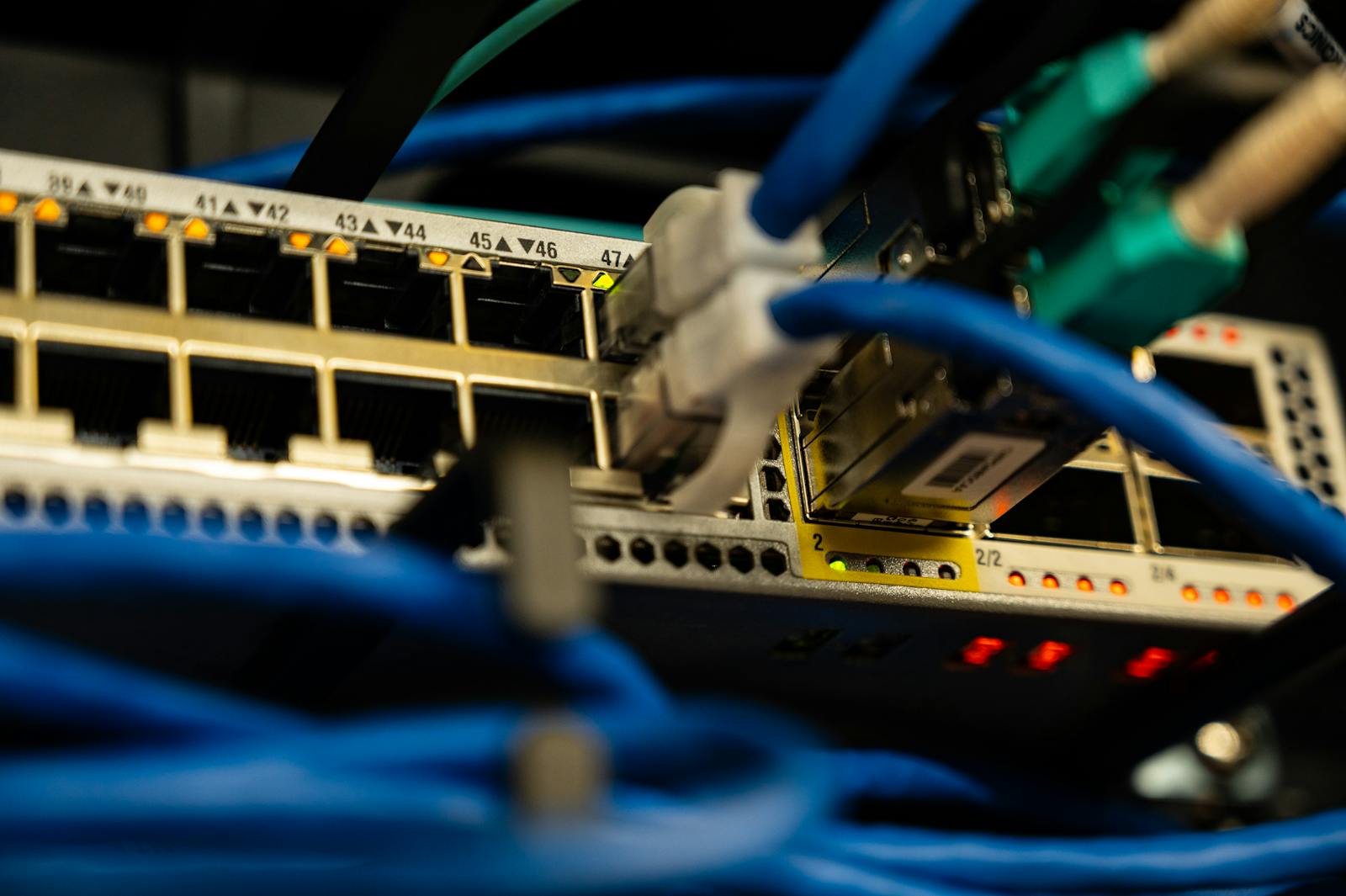
Network redundancy is the practice of building more than one path for critical traffic to reach the internet or the cloud, so that if one connection, carrier, or provider fails, traffic automatically reroutes through another without interrupting the business. It typically combines multiple last-mile circuits (fiber, wireless, or satellite), more than one carrier, and intelligent routing so failover happens in seconds, not hours.
2026 made this a boardroom issue. AWS suffered a roughly 28-hour outage in its us-east-1 region after a cooling failure took down a single data-center hall, disrupting Coinbase trading, FanDuel cash-outs, and CME Group's trading tools — the third major us-east-1 failure since 2021. Cloudflare logged 13 separate incidents in eight days as its R2 storage service faltered, and Microsoft Azure experienced its own configuration-driven outage within the same stretch of the year. Analysts now describe these events as configuration and metadata failures — "the new power cuts" — rather than rare capacity problems, and Forrester expects at least two more major multiday outages before the year is out.
For enterprises in Latin America, the US, and Europe, the takeaway is straightforward: redundancy is no longer a nice-to-have for disaster recovery plans. It is the baseline requirement for keeping revenue-generating systems, call centers, and customer-facing applications online when a single hyperscaler has a bad day. Analysts tracking outage frequency describe 2026 as the year cloud downtime stopped being a rare event and became a recurring planning assumption — which is exactly why more IT leaders are now treating network-level redundancy as a project with a measurable ROI, not a line item to defer.
Why do enterprises need network redundancy? Because most still route all of their traffic through one internet provider and depend on one or two hyperscale clouds for everything from email to core applications. That concentration is exactly what turned isolated incidents into global disruptions in 2026: when AWS, Azure, or Cloudflare stumbled, the outage cascaded through Signal, Snapchat, Fortnite, Amazon Alexa, Reddit, Starbucks' ordering systems, Coinbase, airline check-in counters, and even competing AI tools — because so many unrelated companies shared the same upstream dependency.
The financial exposure is well documented. Downtime costs Global 2000 companies an estimated $400 billion a year, at roughly $9,000 per minute of outage, and a serious incident typically takes a company 75 days to fully recover lost revenue from, with stock prices dropping an average of 2.5% in the aftermath. Hyperscaler SLAs do not close that gap: AWS's own service credits typically cover only 10–30% of the affected service's monthly fee — nowhere near the real cost of a multi-hour regional outage.
Analysts point to two structural reasons this keeps happening: a small handful of hyperscale providers now underpin most of the internet, and those same providers are shifting capital toward GPU-heavy AI infrastructure while, according to Forrester, "aging infrastructure falters under growing complexity." Meanwhile, regional players and specialized carriers that never carried that same concentration risk are becoming an increasingly common part of enterprise architecture precisely because they add diversity rather than more dependence on the same handful of networks. Building multi-carrier network redundancy into your connectivity architecture is how enterprises stop inheriting a hyperscaler's bad day as their own.
Enterprise-grade redundancy is built in layers, not bought as a single product. First, an organization provisions circuits from at least two independent carriers — often a dedicated fiber connection paired with a diverse-path secondary circuit or wireless failover — so a single fiber cut, carrier outage, or last-mile fault cannot take the business offline.
Second, an SD-WAN overlay sits on top of those circuits and continuously monitors latency, packet loss, and jitter on every path in real time. When performance on the primary path degrades — even before it fails completely — SD-WAN steers traffic to the healthier path automatically, without a technician touching a router. This is what separates modern redundancy from the old model of a backup circuit that sits idle until a manual failover.
Third, for organizations running workloads across multiple public clouds, a SASE architecture extends that same intelligent routing to cloud and SaaS traffic, applying consistent security policy regardless of which path or provider traffic takes. Finally, all of this is monitored by a 24/7 network operations center that can see a degrading path before end users notice, and can reroute or escalate before a slowdown becomes an outage.
The result is an active-active network: every circuit and every provider is doing useful work all the time, rather than sitting in reserve, and losing any single one of them is a routine event handled in seconds rather than an emergency handled in hours.
The most immediate benefit is uptime: enterprises with multi-carrier SD-WAN redundancy keep call centers, POS systems, and customer portals running through the kind of regional cloud or carrier failure that took down major platforms in 2026, instead of joining the outage. Given that a single 15-hour regional outage can represent roughly $62,500 in exposure before failover even kicks in, the math on redundancy tends to pay for itself after one avoided incident.
There is also a compliance and risk-management dimension. Regulators and cyber-insurance underwriters increasingly expect documented network resilience and business-continuity planning, not just a security policy on paper — and redundant connectivity paired with managed IT services and cloud backup gives enterprises a concrete, auditable answer when they're asked how the business stays online.
Finally, there's a competitive angle. Customers, partners, and employees increasingly notice — and remember — which vendors stayed up during a widely reported outage. A resilient network is no longer just an IT metric; for organizations doing business across Latin America, the US, and Europe, it is a visible signal of operational maturity that shows up in customer trust and renewal conversations. Enterprises that can say, truthfully, that they stayed online during a widely reported hyperscaler outage have a concrete story to tell in the next RFP or board update — one that a single-provider competitor simply cannot match.
HIT Communications has spent more than 30 years designing enterprise connectivity across Latin America, the United States, and Europe, and network resilience has been core to that work long before 2026's outage wave made it front-page news. Our dedicated internet, SD-WAN, and multi-carrier managed connectivity combine diverse last-mile paths with intelligent, automatic failover so a single carrier or cloud incident never becomes your incident.
Because connectivity, telephony, and security are interdependent, we pair that network architecture with Microsoft Teams Direct Routing and cloud PBX for always-on voice, and with our managed SOC, SIEM, and MDR services for continuous monitoring — all backed by a 24/7 network operations team that watches every path and every provider on your behalf, in your language, in your time zone.
2026 has made one thing clear: no single carrier or cloud provider is immune to outages, and enterprises that depend on just one are gambling with revenue, compliance, and customer trust every time that provider has a bad day. Multi-carrier SD-WAN redundancy turns that gamble into a non-event.
If your organization is still running on a single internet connection or a single cloud path, now is the time to change that before the next outage makes the decision for you. Talk to HIT Communications about designing a redundant, resilient network built for how enterprises actually operate in 2026 and beyond.

Find out how we can transform your business. Talk to one of our experts now!
Get in touch